Alondra Lopez (B.S. ’22, M.Ed. ’24, Ph.D. ’29) is a doctoral student in counseling psychology whose work centers on social justice, bilingual mental health care, and advocacy for immigrant communities.
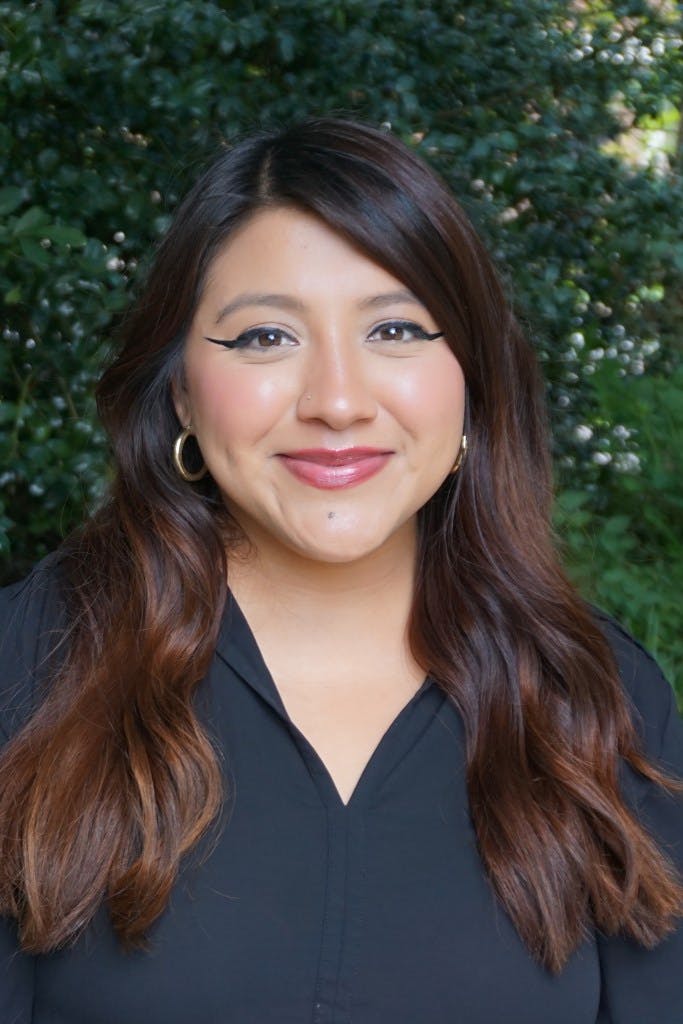
- Hometown: Dalton, Georgia
- Degree objective and graduation date: Ph.D. in counseling psychology, 2029
- Degree(s) and graduation date: B.S. in psychology with minors in women's and gender studies and human development and family science, 2022; M.Ed. in professional counseling (mental health counseling), 2024
I chose the University of Georgia for my Ph.D. in counseling psychology because of the program’s commitment to social justice and work with underserved populations. The opportunity to work with Dr. Edward Delgado-Romero—whose leadership in multicultural psychology and community engagement has shaped my scholarly and clinical path—as well as my master’s-level training, also drew me to this program. At UGA, I am supported in my work providing bilingual, culturally responsive mental health care, engaging in integrated community research, and creating spaces that serve Latinx and immigrant communities in the Southeast.
Why are you passionate about your research, and what sparked your interest in pursuing counseling psychology with a focus on bilingual therapy?
My research focuses on the mental health impacts of immigration detention and enforcement. Using community-based participatory action research, I aim to collaborate with immigrant families and advocates to document detention-related trauma and co-develop community and culturally centered responses rooted in ancestral knowledge and resistance. This work is deeply personal because I grew up in a community shaped by immigration enforcement policies such as 287(g), where the constant threat of detention created fear, instability, and family separation, which impacted me and everyone in my community. Most importantly, however, these circumstances coexisted with community networks, profound love, faith, and mutual care, which continue to inform my research and clinical work.
My interest in pursuing counseling psychology stems from the field’s four core values: a.) growth towards full potential, b.) holistic and contextual understanding of all people, c.) respect for diversity and inclusiveness, and d.) promoting a community perspective in training (Scheel et al, 2018). These values inform my commitment to providing bilingual therapy and expanding the bilingual mental health workforce, which is rooted in the recognition of the long-lasting mental health impacts of persistent fear and instability among immigrant communities and the belief that everyone deserves mental health care, regardless of language, socioeconomic status, or the systemic barriers they face. Fewer than 5.5% of psychologists in the U.S. provide services in Spanish, and even fewer are Latinx.
My advisor, Delgado‑Romero, a founding member of the National Latinx Psychological Association, established the Spanish-language clinic La Clínica In LaK’ech, which provided more than 1,500 hours of free bilingual therapy to uninsured, Latinx, and immigrant clients before its closure in 2024. The clinic was foundational for my motivation to continue in the field of counseling psychology. Through these initiatives and my work with the BIENESTAR Research Team, I hope to continue paying forward what I’ve learned by helping prepare the next generation of bilingual, multiculturally competent mental health providers. My dreams and goals would not be possible without my advisor to pave the way and all my friends and peers in the field who continue to believe in me.
What do you hope to accomplish with your research?
Through bilingual mental health interventions, community workshops, and policy advocacy, I strive to make mental health care accessible and affirming for immigrant communities across the Southeast. I see research not as a tool for academic recognition, but as a means of collective liberation, amplifying the stories, knowledge, and resistance of those most impacted. My journey involves navigating through multiple worlds: academia, community organizing, and clinical practice; and working to build bridges between them. My goal is to deconstruct ideas of traditional mental health care, individualistic notions, and affirm the deep cultural knowledge and joy held by Spanish-speaking immigrant communities. I hope to move the field of counseling psychology closer to its roots of social justice practice, the recognition of global interconnectedness, and the notion of optimal psychology.
Are you involved in any academic or service-oriented organizations? If yes, how do they enhance your academic and/or research endeavors?
As a counseling psychologist in training, I frequently ask myself: What is my role in responding to systemic harm? For over a year, I volunteered with El Refugio, visiting individuals detained at Stewart Detention Center—many separated from their families or held in long-term detention. While not in the role of a therapist, I draw on my knowledge in trauma-informed practices and presence to offer a moment of connection and dignity in an incredibly inhumane system. I’ve also invited classmates and peers to join, helping build a network of volunteers who support detained individuals and carry these stories back into their communities. Locally, I am involved with the Athens Immigrant Rights Coalition, which supports immigrant families through local policy and various volunteer initiatives and aims to create a community where all people are safe regardless of citizenship status.
What are your future plans after you graduate with your doctoral degree?
Although I explored doctoral programs outside the state, I always planned to return and practice in Georgia, where my family and community ties are rooted. After completing my Ph.D. in counseling psychology, I plan to pursue licensure and continue developing as a scientist-practitioner and potentially as an educator. I recognize that without the mentorship and support I received, I would not be able to pursue a Ph.D. as a low-income, first-generation college student. I hope to support other young, Latinx students interested in contributing to the bilingual mental health workforce in the state and investing in our communities. My long-term career goal is to serve Spanish-speaking, immigrant, and Latinx communities in Georgia. I envision this will include providing bilingual, culturally responsive therapy; conducting research grounded in liberation psychology that attends to the social and political contexts shaping mental health; and expanding access to bilingual mental health care.