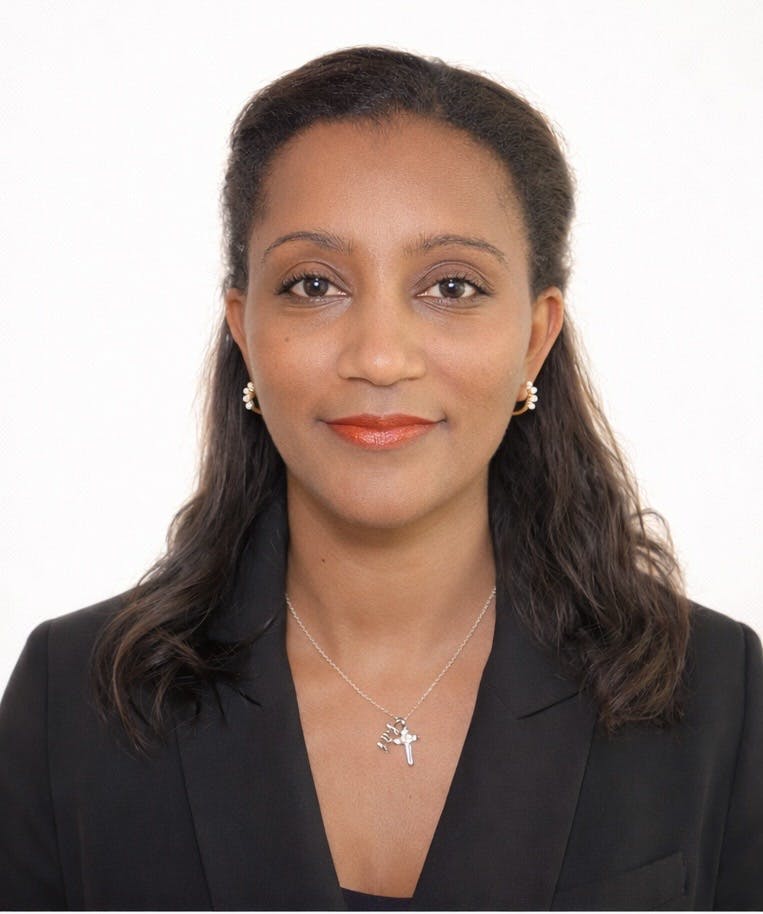
Through her research into professional development and instructional leadership, Beza Tefera Muzein (Ph.D. ’27) aims to implement professional learning systems in schools that support teachers’ needs and, in turn, foster high-quality instruction for students.
- Hometown: Addis Ababa, Ethiopia
- Degree objective and graduation date: Ph.D. in educational administration and policy, spring 2027
- Degree(s) and graduation date: M.B.A. in project management, Wisconsin International University College, 2018; B.S. in computer science, St. Mary’s University, 2007
I chose the University of Georgia because of its national reputation in educational leadership, instructional supervision, and instructional coaching. I was drawn to the program’s strong emphasis on research-to-practice connections and the faculty’s expertise in professional learning and instructional leadership. I decided to work with Sally J. Zepeda, an internationally recognized scholar well-known for her work on instructional supervision, job-embedded professional development, and teacher growth. Her scholarship on supervision models that emphasize reflective practice and continuous improvement strongly influenced my decision. UGA’s commitment to producing scholarship that directly impacts school systems aligns with my professional goals and values.
What are your research interests?
My research focuses on instructional leadership, job-embedded professional development, and the role of instructional coaches in advancing evidence-based literacy practices. My work situates itself at the intersection of instructional supervision and the sensemaking processes of instructional coaches. Specifically, I investigate how systemic professional learning supports can foster joyful, high-capacity school cultures that prioritize teacher well-being and student success.
My dissertation examines how instructional coaches make sense of evidence-based literacy practices. Although many methods exist to support teacher growth, interventions often fall short without consistent support, resources, and collaboration. As schools and districts work to improve student achievement, it is essential to understand how teachers are observed, assessed, and supported in the classroom.
Using a qualitative multiple case study design, I investigated how instructional coaches in a southeastern Georgia school system interpreted Science of Reading (SoR) classroom walkthrough observations. Drawing on sensemaking theory, the study explored how coaches enacted their roles in supporting teachers. Through within-case and cross-case analysis, the findings showed that coaches supported teachers through observation, feedback, and guidance. Walkthroughs created opportunities to identify areas for targeted support, strengthen instructional quality, and deepen alignment with evidence-based literacy practices.
In my collaborative research with Dr. Zepeda, I have also examined central office support and the “assistive relationships” necessary to scale best practices. I am committed to exploring how equitable leadership practices can be operationalized to support diverse learning communities and sustainable school improvement.
 Tell me about your work with Marietta City Schools.
My work with Marietta City Schools has centered on building and sustaining a strong research–practice partnership focused on implementing SoR. Over the past three years, I have served as a key liaison between the university research team led by Dr. Zepeda and district leadership, working closely with the superintendent, deputy superintendent, principals, instructional coaches, and SoR facilitators. This role has required consistent, professional communication, careful follow-up, and the ability to navigate high-level district relationships with both competence and diplomacy. Through this work, I have helped establish trust and mutual respect, ensuring that our research efforts remain responsive to district priorities and contexts.
During the third year of the district’s SoR implementation, Dr. Zepeda and I developed an SoR walkthrough observation instrument to support the initiative. The instrument includes content and a rubric aligned with eight standards and their associated observable practices. These practices were drawn from research literature, lessons learned from the district’s implementation, the district’s initial SoR framework, and special reports related to literacy and the SoR.
From a research perspective, I have contributed across all phases of the research cycle. I supported the design and refinement of interview protocols, collaborating with district leadership to ensure instruments were methodologically rigorous and contextually appropriate. During data collection, I coordinated and conducted interviews with diverse stakeholder groups, managing timelines while maintaining strong rapport and research integrity. I have led transcript processing and qualitative analysis, systematically identifying themes that illuminate how professional learning transfers into practice for school leaders and instructional staff. In collaboration with another research assistant, I have translated complex qualitative findings into clear, actionable preliminary reports that provide formative feedback to the district and inform ongoing program evaluation. These experiences have strengthened my skills in applied research, stakeholder engagement, and knowledge translation, and they reflect the type of professional and scholarly work I aspire to continue in my career.
What was your favorite class in the Mary Frances Early College of Education and why?
My favorite course was EDAP 7020E: Instructional Leadership for School Improvement, as it strengthened my understanding of how leadership theory is applied in real educational settings. The course helped me develop the knowledge, skills, and professional dispositions essential for effective instructional leadership. It provided hands-on opportunities to translate theory into practice, particularly in managing instructional programs, observing classroom instruction, and delivering actionable feedback to teachers. As part of the course, I visited a middle school in the Clarke County School District to conduct a classroom observation and provide targeted, constructive feedback. The course also pushed me to think critically, engage in meaningful research, and apply leadership concepts directly to school and district improvement initiatives.
What made you take interest in the educational administration and policy program and focus specifically on job-embedded professional learning and instructional coaching?
My interest in the educational administration and policy (EDAP) program is rooted in my early experiences with inequities in access to quality education in Ethiopia and other African countries, where the targeting of education for personal gain significantly undermined educational quality. These experiences prompted critical reflection on supervision, accountability, and educational policy, and their implications for student learning.
This interest deepened during my professional journey as an elementary, middle, and high school teacher, where I frequently lacked meaningful instructional support or job-embedded professional learning to improve my practice. Similar challenges persisted in my later roles as a part-time lecturer and assistant registrar in higher education, reinforcing my commitment to strengthening systems of teacher support and supervision.
Pursuing my master’s degree in Ghana further broadened my perspective on education across diverse cultural and policy contexts, while my subsequent work at the university level allowed me to support students, faculty, and administrators. Collectively, these experiences solidified my focus on professional development as a lever for instructional improvement.
As a doctoral student at the University of Georgia, my research centers on job-embedded professional learning and instructional coaching, particularly observation and feedback practices. Having never experienced actionable feedback as a teacher or administrator, I am driven to study how instructional coaching can bridge research and practice to inform policies and improve teaching and leadership outcomes.
Tell me about your campus and community involvement. How have those organizations or activities helped shape your graduate school experience?
I have been actively involved in the Lifelong Education Administration and Policy–Graduate Student Network as an EDAP representative, supporting fundraising efforts and contributing to initiatives that benefit graduate students. Through this role, I gained valuable experience collaborating with peers, engaging in service-oriented leadership, and supporting the broader graduate community.
Currently, I serve as a Graduate Student Association council member, advocating for graduate students’ needs, concerns, and interests. This role has allowed me to work closely with student leaders and university stakeholders while strengthening my voice as a scholar and emerging educational leader.
Collectively, these leadership experiences have enhanced my research and communication skills, supported my professional growth, and expanded my academic and professional network. Most importantly, they have fostered a strong sense of belonging within the academic community and reinforced my commitment to service, collaboration, and leadership in higher education.
What are your plans following graduation?
Following graduation, I plan to work at the intersection of research, district leadership, and professional learning, either in higher education or in a leadership role within a school district. I am particularly interested in roles that allow me to collaborate closely with educators and leaders to translate research into practical strategies that support teaching and learning.
In the long term, my goal is to contribute to research-informed practices that strengthen instructional quality and leadership development at scale. I hope to support school and district leaders in creating sustainable professional learning systems that are job-embedded, collaborative, and responsive to the needs of teachers and students. Ultimately, I aim to bridge the gap between research, policy, and practice to support meaningful and lasting improvement across educational systems.